
Table of Contents
Pork and sauerkraut
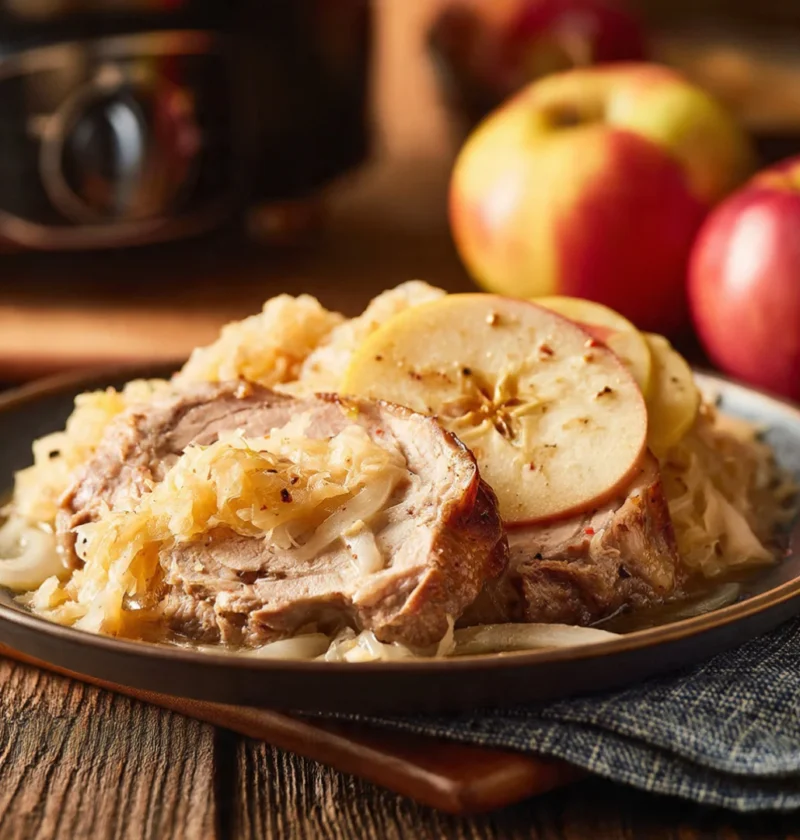
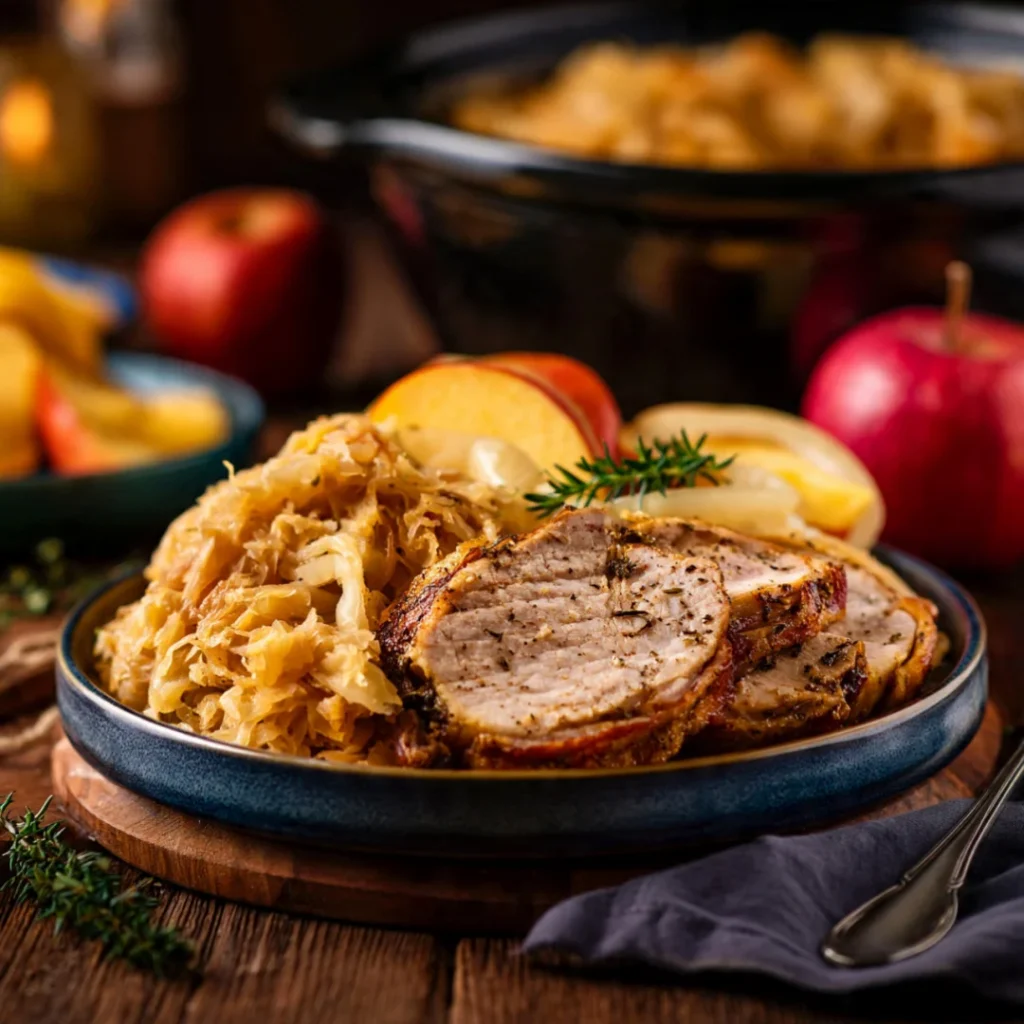
Cold-weather cooking does not get more satisfying than a Dutch oven full of fall-apart tender pork nestled into tangy sauerkraut with soft apples and warm spices. Pork and Sauerkraut is a classic braised meal rooted in German and Eastern European tradition, long eaten on New Year’s Day for good luck and now loved year-round for its deep, slow-cooked flavor.
What makes this recipe so easy and rewarding is the hands-off process. You sear the pork until deeply golden, layer it over a bed of sauerkraut with onions, apples, brown sugar, and Dijon mustard, then let the oven do the rest. That low, slow braise transforms the pork into something rich and pull-apart soft, while the sauerkraut loses its sharp edge and becomes mellow, savory, and almost silky.
The apple and brown sugar balance the tang without making the dish sweet, which is exactly why this combination has stayed on dinner tables for generations. It is comfort food that takes care of itself. Let’s get it into the oven.
This fall-apart shredded pork folded into soft sauerkraut is the kind of bowl that makes the whole house smell like a slow Sunday.
WHY YOU’LL LOVE THIS RECIPE
- Searing the pork first builds a deeply savory crust that flavors the whole braise as it cooks.
- Apple and brown sugar mellow the tang of the sauerkraut so every bite tastes balanced instead of sharp.
- The oven does the heavy lifting for 3 to 3.5 hours, giving you mostly hands-off cook time.
- It feeds a crowd from one pot, which makes it a smart choice for gatherings, holidays, and meal prep.
- Leftovers taste even better the next day once the flavors settle overnight.
INGREDIENTS
HOW TO MAKE IT (Step by Step)
Preheat the oven to 300°F. Season the pork butt generously on all sides with salt, pepper, and garlic powder, about 3 minutes.
Heat oil in a large Dutch oven over medium-high heat. Sear the pork on all sides until deeply golden, about 8 to 10 minutes total. Transfer the pork to a plate. Pro tip: do not rush the sear. Those golden-edged caramelized bits on the bottom of the pot build the backbone of the whole braise.
Reduce the heat to medium. Add the onion and apples and cook, stirring occasionally, until softened and lightly browned, about 5 to 8 minutes.
Stir in the garlic, brown sugar, Dijon mustard, caraway seeds, smoked paprika, remaining black pepper, and bay leaf. Cook until fragrant, about 1 minute.
Add the drained sauerkraut and pour in the chicken broth, stirring well to create an even bed across the bottom of the pot.
Nestle the seared pork butt on top of the sauerkraut mixture, cover with the lid, and transfer to the oven. Roast for 3 to 3.5 hours, until the pork is fork-tender. Pro tip: check at the 3-hour mark by pressing the pork with a fork. It should give and start to separate easily.
Remove the lid, increase the oven temperature to 375°F, and continue roasting for 20 to 30 minutes to let the pork brown and the liquid reduce slightly.
Remove from the oven and let the pork rest for 10 minutes. Shred it directly in the Dutch oven using two forks, then fold into the sauerkraut mixture and serve warm.
MACROS & NUTRITION TABLE
| Per Serving | Amount |
|---|---|
| Calories | 390 |
| Protein (g) | 35 |
| Carbs (g) | 14 |
| Net Carbs (g) | 11 |
| Fat (g) | 22 |
| Fiber (g) | 3 |
Note: Macros are estimated from standard nutrition averages for the ingredients listed here and divided into 6 servings. Values will vary based on the size of the pork butt, fat trimmed, and sauerkraut brand used.
PRO TIPS & VARIATIONS
- Choose a bone-in or boneless pork butt over pork loin because the higher fat content keeps the meat moist through the long braise.
- Drain the sauerkraut but do not rinse it. That tangy brine still adds flavor even after draining.
- For a slow cooker version, follow the same sear and sauté steps, then transfer everything to a 6-quart slow cooker and cook on LOW for 8 to 10 hours or HIGH for 4 to 5 hours.
- Add sliced kielbasa sausage to the pot in the last hour for an even heartier, more traditional version.
- Gluten-free variation: This recipe is naturally gluten-free as written. Just confirm your chicken broth and Dijon mustard are certified gluten-free brands.
SERVING SUGGESTIONS
- Spoon the shredded pork and sauerkraut over creamy mashed potatoes so the braising liquid soaks into every bite.
- Serve alongside buttered egg noodles or spaetzle for a classic German-inspired plate.
- Add a side of crusty bread or dinner rolls to soak up the rich, tangy braising liquid from the pot.
STORAGE & REHEATING
- Fridge: Store leftovers in an airtight container in the refrigerator for up to 4 days. The flavor deepens overnight, which makes next-day pork and sauerkraut taste even richer.
- Freezer: Freeze the shredded pork and sauerkraut together in a freezer-safe container for up to 3 months. Thaw overnight in the fridge before reheating.
- Reheat: Warm gently on the stovetop over medium-low heat with a splash of broth until heated through, or microwave covered in 90-second intervals, stirring between each.
FAQ SECTION (People Also Ask format)
Q: What cut of pork is best for pork and sauerkraut?
A: Pork butt, also called pork shoulder, is the best cut for this recipe because its higher fat content keeps it juicy and fall-apart tender through the long, slow braise. Leaner cuts like pork loin or tenderloin will cook faster and can dry out if left too long in the oven.
Q: Should you rinse sauerkraut before cooking with pork?
A: Draining is recommended but rinsing is optional. Draining removes excess liquid without stripping all the tangy flavor, which you still want in the final dish. If you prefer a milder taste, a quick rinse under cold water will pull back the sharpness before cooking.
Q: Can I make pork and sauerkraut in a slow cooker?
A: Yes. Sear the pork and sauté the aromatics first on the stovetop, then transfer everything to a slow cooker with the sauerkraut and broth. Cook on LOW for 8 to 10 hours or HIGH for 4 to 5 hours until the pork shreds easily with two forks.
Q: Why do people eat pork and sauerkraut on New Year’s Day?
A: It is a long-standing German and Pennsylvania Dutch tradition believed to bring good luck and prosperity in the new year. The pork symbolizes progress because pigs root forward, and sauerkraut’s green color is associated with money and abundance.
Q: What can I add to pork and sauerkraut for more flavor?
A: Apples, brown sugar, caraway seeds, Dijon mustard, and smoked paprika all build a deeper, more layered flavor in this slow-braised pork dish. A splash of white wine or apple cider vinegar during deglazing also adds brightness and complexity to the braising liquid.
CALL TO ACTION
I hope this Pork and Sauerkraut recipe earns a regular spot in your cold-weather dinner rotation and on your New Year’s Day table. If you make it, drop a comment sharing how you served it, save it to Pinterest so it is always within reach, and share it with someone who loves a slow-cooked, hands-off dinner. Next, try a slow cooker pulled pork recipe for another fall-apart tender weeknight centerpiece that practically cooks itself.
Pork and Sauerkraut
Ingredients
Pork
- 3 pounds boneless pork butt, left whole
- Salt and black pepper, generous amount to taste
- 1 teaspoon garlic powder
- 1 tablespoon neutral oil
Aromatics
- 1 medium yellow onion, sliced
- 2 medium apples, peeled and diced
- 3 garlic cloves, minced
- 1 tablespoon brown sugar
- 1 tablespoon Dijon mustard
- 1/2 teaspoon caraway seeds
- 1/2 teaspoon smoked paprika
- 1 bay leaf
Base
- 2 pounds sauerkraut, drained
- 1 cup chicken broth
Instructions
- Preheat and season (3 minutes): Preheat the oven to 300°F (150°C). Season the pork butt generously on all sides with salt, black pepper, and garlic powder.
- Sear the pork (8–10 minutes): Heat the oil in a large Dutch oven over medium-high heat. Sear the pork on all sides until deeply golden, about 8 to 10 minutes total. Transfer the pork to a plate. Do not rush the sear — those caramelized bits on the bottom of the pot build the backbone of the whole braise.
- Soften the aromatics (5–8 minutes): Reduce the heat to medium. Add the sliced onion and diced apples and cook, stirring occasionally, until softened and lightly browned, about 5 to 8 minutes.
- Add spices and mustard (1 minute): Stir in the garlic, brown sugar, Dijon mustard, caraway seeds, smoked paprika, a pinch of black pepper, and the bay leaf. Cook until fragrant, about 1 minute.
- Build the braise base (2 minutes): Add the drained sauerkraut and pour in the chicken broth, stirring well to create an even bed across the bottom of the pot.
- Braise in the oven (3 to 3.5 hours): Nestle the seared pork butt on top of the sauerkraut mixture. Cover with the lid and transfer to the oven. Roast for 3 to 3.5 hours, until the pork is fork-tender. Check at the 3-hour mark by pressing the pork with a fork — it should give and start to separate easily.
- Uncovered finish (20–30 minutes): Remove the lid and increase the oven temperature to 375°F (190°C). Continue roasting for 20 to 30 minutes to let the pork brown and the liquid reduce slightly.
- Rest, shred, and serve (10 minutes): Remove from the oven and let the pork rest for 10 minutes. Shred it directly in the Dutch oven using two forks, then fold it into the sauerkraut mixture and serve warm.
Nutrition
Approximate per serving (1 of 6):
| Calories | 390 |
| Protein | 35 g |
| Carbs | 14 g |
| Net Carbs | 11 g |
| Fat | 22 g |
| Fiber | 3 g |
Macros estimated from standard nutrition averages divided into 6 servings. Values will vary based on pork butt size, fat trimmed, and sauerkraut brand used.