
Table of Contents
Cheese Danishes: A Delightful Pastry Treat
There is something undeniably special about a warm Cheese Danish, with its flaky golden pastry, creamy sweetened center, and that bakery-case charm that somehow makes an ordinary morning feel a little brighter. Recipes for easy cheese danishes consistently describe them as buttery, flaky pastries filled with a cream cheese mixture made from cream cheese, sugar, egg yolk, vanilla, and often a little lemon juice or zest for brightness.
What makes this pastry such a delightful treat is the contrast in textures. The outer layers bake up crisp and light, while the middle stays soft, rich, and just sweet enough to taste indulgent without feeling heavy. Many modern home recipes simplify the process by using store-bought puff pastry or crescent dough, which turns cheese danishes into an easy breakfast pastry instead of an all-day baking project.
That shortcut does not mean sacrificing flavor. Published recipes repeatedly show that a simple filling of softened cream cheese, granulated sugar, egg yolk, vanilla, and lemon folded into puff pastry and baked at around 375°F to 400°F creates a bakery-style result with very little effort. Some even finish with a sweet glaze for that classic coffee-shop feel.
For this version, I’m treating Cheese Danishes as a comforting American breakfast pastry inspired by classic Danish bakery flavors but made the easy modern way with puff pastry and cream cheese filling. It is flaky, creamy, elegant, and just the kind of treat that makes brunch, holidays, or a slow weekend morning feel extra special. Let’s get started.
Why You’ll Love This Recipe
Fruit and Cream Cheese Danishes
This is exactly the kind of pastry recipe people love because it feels fancy but stays practical.
- It is surprisingly easy because many current recipes rely on store-bought puff pastry or crescent dough instead of homemade Danish dough.
- The filling is simple and classic: cream cheese, sugar, egg yolk, vanilla, and lemon, which creates that rich bakery-style center.
- If you love easy breakfast pastries, brunch treats, or cream cheese desserts, this recipe lands right in that sweet spot. Several sources position it as perfect for breakfast, brunch, or holiday mornings.
- The flaky pastry and creamy center create that irresistible contrast people expect from a cheese Danish.
- It is easy to customize with fruit toppings, glaze, or different pastry shapes. Published versions include berries, icing, and alternate dough options.
- It looks bakery-worthy with very little effort, which is one reason these easy cheese danish recipes are so popular.
Ingredients
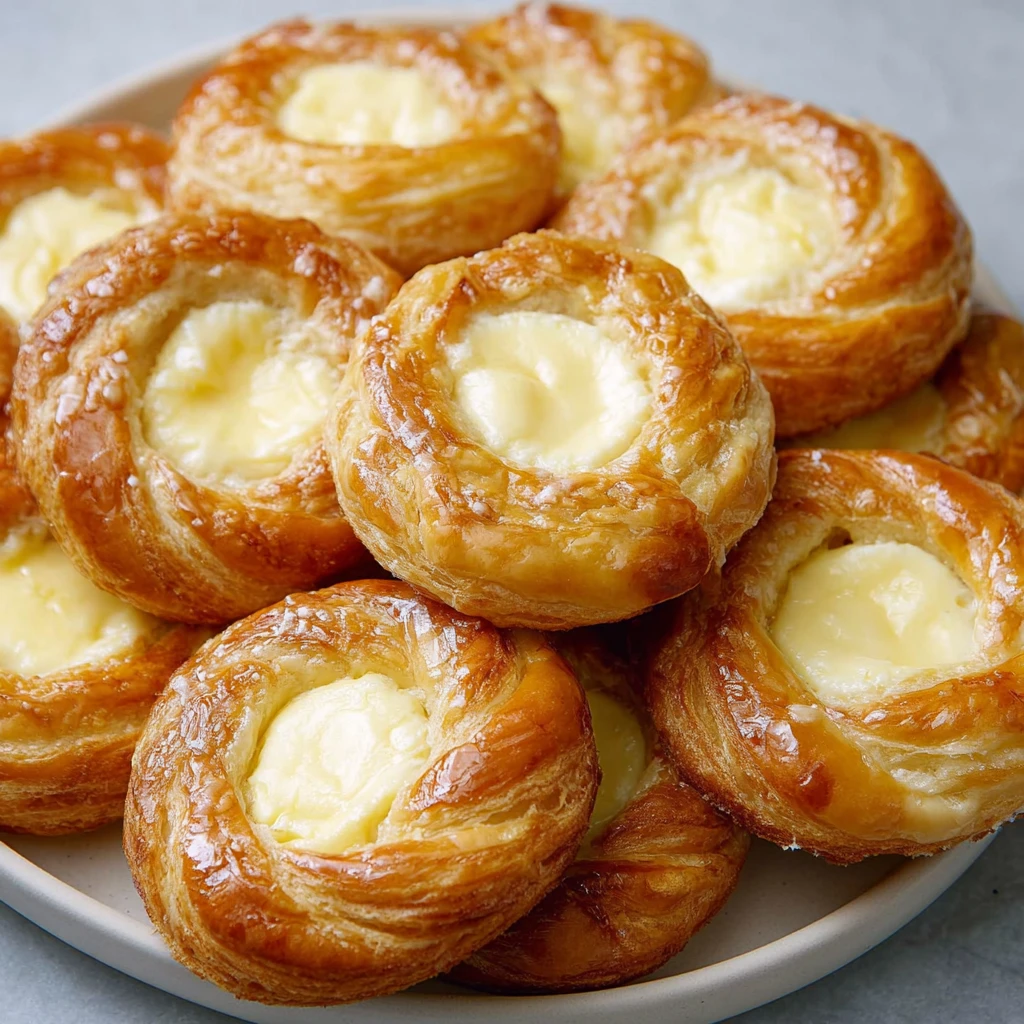
The ingredient list for easy Cheese Danishes is short and consistent across the most relevant recipes. The most common version uses puff pastry, softened cream cheese, sugar, egg yolk, vanilla, lemon juice or zest, and an egg wash, with optional glaze on top.
Softened cream cheese is important here. Several recipes specifically call for room-temperature cream cheese so the filling blends smoothly and bakes up creamy rather than lumpy.
Step-by-Step Instructions
1. Prep the oven and pastry
Preheat your oven to 375°F to 400°F and line a baking sheet with parchment paper. Published cheese danish recipes commonly bake within this range, with puff pastry versions frequently using 400°F for a crisp golden finish.
Unfold the thawed puff pastry and cut it into squares or rectangles, depending on the shape you want. Several recipes use rectangles, while others use squares or folded corners to create a classic danish shape.
2. Make the cream cheese filling
In a mixing bowl, combine the softened cream cheese, sugar, egg yolk, vanilla, and lemon juice or zest. This exact filling formula appears repeatedly across the recipe sources.
Beat until smooth and creamy. A useful tip is to scrape the bowl well so no cream cheese lumps remain, because a silky filling gives the final pastries a much more bakery-like texture.
3. Shape the danishes
Place the pastry pieces on the lined baking sheet, leaving a little space between them. If using squares, lightly score a border around the edge or fold the corners inward so the filling stays centered while the edges puff. This shaping style is common in puff pastry cheese danish recipes.
Brush the outer edges with beaten egg. Recipes note that this step helps the pastry bake up shiny and beautifully golden.
4. Fill the centers
Spoon the cream cheese mixture into the center of each pastry, spreading it slightly but keeping it away from the outer border. Several easy cheese danish recipes describe spooning the filling into the center and leaving room around the edges so the pastry can rise.
If you want a fruit version, top with a few berries or a spoonful of jam. Published versions often pair the cheese filling with berries for a classic bakery variation.
5. Bake until golden
Bake for about 15 to 20 minutes, or until the pastry is puffed and deeply golden around the edges. Puff pastry cheese danish recipes consistently follow that bake-until-golden approach.
A good tip here is to watch the edges rather than just the center. The cream cheese filling stays pale, so the pastry color is the real sign of doneness.
6. Cool and glaze
Let the danishes cool for a few minutes on the baking sheet, then move them to a wire rack. If you want a glazed finish, whisk powdered sugar with a little milk or cream and drizzle it over the cooled pastries. Several cheese danish recipes include a simple glaze for that bakery-style final touch.
Serve them slightly warm or at room temperature. That is when the filling is soft, the pastry is flaky, and the whole thing feels especially irresistible.
This puff pastry style is one of the most common home versions of Cheese Danishes, with crisp golden corners and a creamy center that looks polished without being complicated.
Tips for Success
These small details will help your Cheese Danishes come out flaky, creamy, and bakery-worthy.
- Use puff pastry that is thawed but still cold. Puff pastry recipes work best when the dough is pliable without becoming too soft.
- Soften the cream cheese fully before mixing. Multiple recipes call for room-temperature cream cheese for a smooth filling.
- Do not overload the filling. Too much cream cheese can spill as the pastry puffs in the oven.
- Brush the pastry edges with egg wash for better color and shine. This is a standard step in easy cheese danish recipes.
- Keep the filling away from the edges so the pastry can rise properly.
- Bake until the pastry is clearly golden, not just lightly colored, so the layers stay crisp instead of underbaked.
- Let them cool briefly before glazing so the icing does not melt completely off the pastry.
Variations & Substitutions
This pastry is wonderfully adaptable, which is part of why it stays so popular.
Berry cheese danish
Top the filling with blueberries, raspberries, or strawberries for a fruit-and-cheese variation. One easy recipe specifically includes 1 1/2 cups berries as an optional topping.
Crescent roll danish
Use crescent roll dough instead of puff pastry for a softer, more casual version. Several recipes specifically use canned crescent dough as the base.
Bakery-style from scratch
If you want the full traditional experience, some recipes make homemade Danish pastry dough from scratch, though that is a much more involved process than the puff pastry route.
Lemon or vanilla glaze
Finish with a sweet glaze flavored with vanilla or citrus. Glazed finishes are common in cheese danish recipes and add that coffee-shop feel.
What to Serve With It
Cheese Danishes fit beautifully into breakfast, brunch, or dessert-style spreads.
- Serve with coffee or tea for a classic bakery breakfast pairing. Many recipes frame these as breakfast treats or brunch pastries.
- Add fresh fruit and yogurt for a more balanced brunch plate.
- Pair with eggs and bacon if you want a sweet-and-savory weekend breakfast spread.
- Serve with fruit salad or mimosas for holiday brunches, which aligns with the “special morning” role many recipes describe.
Storage & Reheating
Because Cheese Danishes contain cream cheese filling, they store best refrigerated after they cool. The pastry is most crisp on the first day, but gentle reheating helps bring back some flakiness. That storage approach fits the ingredient structure in the recipe sources.
Store leftover danishes in an airtight container in the refrigerator for up to 3 to 4 days. Reheat briefly in the oven, toaster oven, or air fryer so the pastry crisps up again. The oven is the best option if you want to restore that flaky texture.
You can also freeze them, though the pastry texture is best when freshly baked. If frozen, thaw in the fridge and warm gently before serving.

Nutrition Facts
Nutrition varies a lot depending on size, dough type, and glaze, but existing sources provide a solid reference range. One commercial cheese danish listing reports 460 calories, 69 grams of carbs, 17 grams of fat, 35 grams of sugar, and 6 grams of protein per danish, while another listing for a smaller cheese danish pastry reports 265 calories per 2.5-ounce piece.
Here is a practical estimated nutrition profile for one homemade puff pastry Cheese Danish with cream cheese filling:
| Nutrient | Estimated per serving |
|---|---|
| Calories | 265 to 460 |
| Protein | 4 to 6 g |
| Carbs | 32 to 69 g |
| Fat | 13 to 17 g |
| Fiber | 1 to 2 g |
| Sugar | 14 to 35 g |
| Sodium | 250 to 510 mg |
This is definitely a treat-style pastry rather than a high-protein breakfast, but the exact richness depends heavily on portion size and whether you add glaze or fruit. Smaller homemade puff pastry versions will generally land closer to the lower end of the range.
Common Mistakes to Avoid
A few small issues can keep your danishes from turning out as flaky and polished as they should.
- Using puff pastry that is too warm can make the pastry lose definition and puff less dramatically.
- Filling the pastry too close to the edges can prevent the border from rising properly.
- Using cold cream cheese can leave the filling lumpy instead of smooth. Multiple recipes specifically call for softened cream cheese.
- Underbaking can leave the pastry pale and soft instead of crisp and flaky. Several recipes emphasize baking until the pastry is golden brown.
- Glazing while the danishes are too hot can make the icing melt away instead of sitting prettily on top.
FAQ
Is it easier to make Cheese Danishes with puff pastry or crescent dough?
Yes, and puff pastry is one of the most common shortcuts in current recipes. Crescent dough is also widely used for an even easier, softer version.
What is the filling in a Cheese Danish?
The filling is typically a sweetened cream cheese mixture made with cream cheese, sugar, egg yolk, vanilla, and lemon juice or zest. That formula appears repeatedly across recipe sources.
Can I make Cheese Danishes ahead of time?
Yes. They can be baked ahead and stored in the fridge, then gently reheated before serving. This works well because the filling is stable and the pastry crisps back up with dry heat.
Can I add fruit to Cheese Danishes?
Absolutely. Many recipes top the cream cheese filling with berries or fruit preserves for an easy variation.
Why did my Danish pastry get soggy?
The most common causes are underbaking, overfilling, or letting the pastry sit too long after baking without cooling properly. Puff pastry versions need enough bake time for the layers to crisp.
Should Cheese Danishes be refrigerated?
Yes, because of the cream cheese filling. After they cool, storing them in the refrigerator is the safest and most practical option.
Can I freeze Cheese Danishes?
Yes, though the pastry is at its best fresh. If frozen, thaw and reheat gently to restore some of the flakiness. This follows standard handling for puff pastry cream cheese bakes.
Conclusion
Cheese Danishes are exactly the kind of delightful pastry treat that make breakfast feel a little more magical. With flaky golden pastry, smooth cream cheese filling, and just enough sweetness to feel indulgent, they bring bakery-style charm to your kitchen without requiring a complicated baking day. That easy, puff-pastry-based approach is strongly reflected across the most relevant recipe sources.
If you loved this pastry idea, the next delicious directions to try are berry cheese danishes or a glazed cream cheese Danish made with crescent roll dough. Both stay true to the same flaky, creamy, crowd-pleasing feel.

Cheese Danishes
Indulge in the delightful flavors of flaky, buttery pastries filled with a luscious, creamy cheese filling that melts in your mouth with each bite. Cheese Danishes are perfect for breakfast, brunch, or any time you crave a sweet treat.
Ingredients
- 1 cup Butter
- 8 oz Cream Cheese
- 1/2 cup Sugar
- 1 tsp Vanilla Extract
- 2 cups Flour
- Water
Directions
-
Begin by preparing the pastry dough, combining flour, butter, and water until a smooth dough forms.
-
Roll out the dough and cut it into squares to form the base of the danishes.
-
In a separate bowl, mix cream cheese, sugar, and vanilla extract until smooth and creamy.
-
Place a dollop of the cheese filling onto each pastry square and fold the edges to create a danish shape.
-
Bake the danishes until golden brown and the cheese filling is set.
-
Allow the pastries to cool slightly before serving and enjoying the delightful flavors.