
Table of Contents
Eggs Benedict: A Classic Breakfast Delight
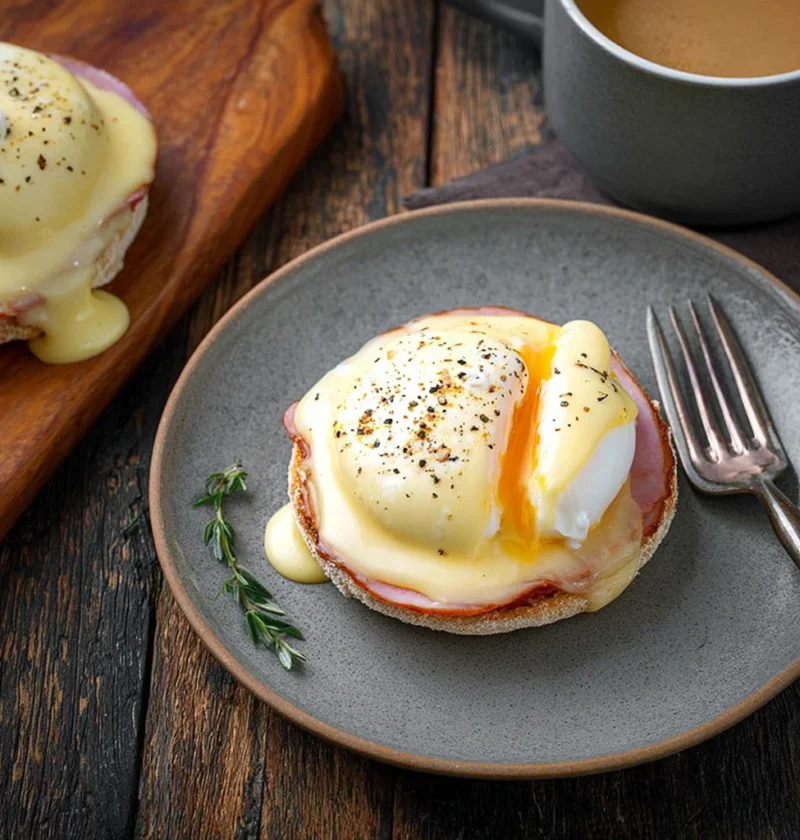
There are few breakfast dishes that feel as luxurious and comforting as Eggs Benedict. It is the kind of classic breakfast delight that turns an ordinary morning into something special, layering toasted English muffins, savory Canadian bacon or ham, perfectly poached eggs, and silky hollandaise sauce into one rich, elegant bite. Multiple classic recipe sources describe Eggs Benedict with this same signature structure and emphasize that the hollandaise is what gives the dish its creamy, tangy finish.
What makes Eggs Benedict so memorable is the contrast. You get crisp toasted bread, salty ham, delicate eggs with runny yolks, and a warm buttery sauce sharpened with lemon. Published recipes consistently describe hollandaise as a mixture of egg yolks, lemon juice, and melted butter, often with a little cayenne, vinegar, or cream depending on the method.
It may look like restaurant food, but the basic process is very doable at home once you break it into steps: make the sauce, poach the eggs, toast the muffins, warm the meat, and assemble right away. Some modern recipes even use a blender hollandaise for an easier, more foolproof approach, while still keeping the classic flavor profile intact.
For this version, I’m treating Eggs Benedict as a classic American brunch recipe with English muffins, Canadian bacon, poached eggs, and homemade hollandaise. It is rich, elegant, cozy, and exactly the kind of breakfast recipe that feels worthy of weekends, holidays, and special brunch tables. Let’s get started.
Why You’ll Love This Recipe
This dish is a classic for a reason.
- It combines some of the most satisfying breakfast textures in one plate: crisp toast, tender ham, silky sauce, and soft poached eggs.
- It feels restaurant-worthy, but multiple recipe sources show that it can absolutely be made at home with simple, clear steps.
- If you love rich brunch recipes, classic breakfast dishes, or elegant eggs recipes, this one belongs in your rotation.
- The hollandaise sauce can be made the traditional way or with a blender, giving you flexibility depending on your comfort level.
- It is easy to customize with bacon, ham, smoked salmon, or even a vegetarian base. Published recipes include ham, Canadian bacon, crispy bacon, and smoked salmon.
- It is one of those breakfast recipes that always feels special, whether you are making brunch for two or serving a holiday crowd.
Ingredients
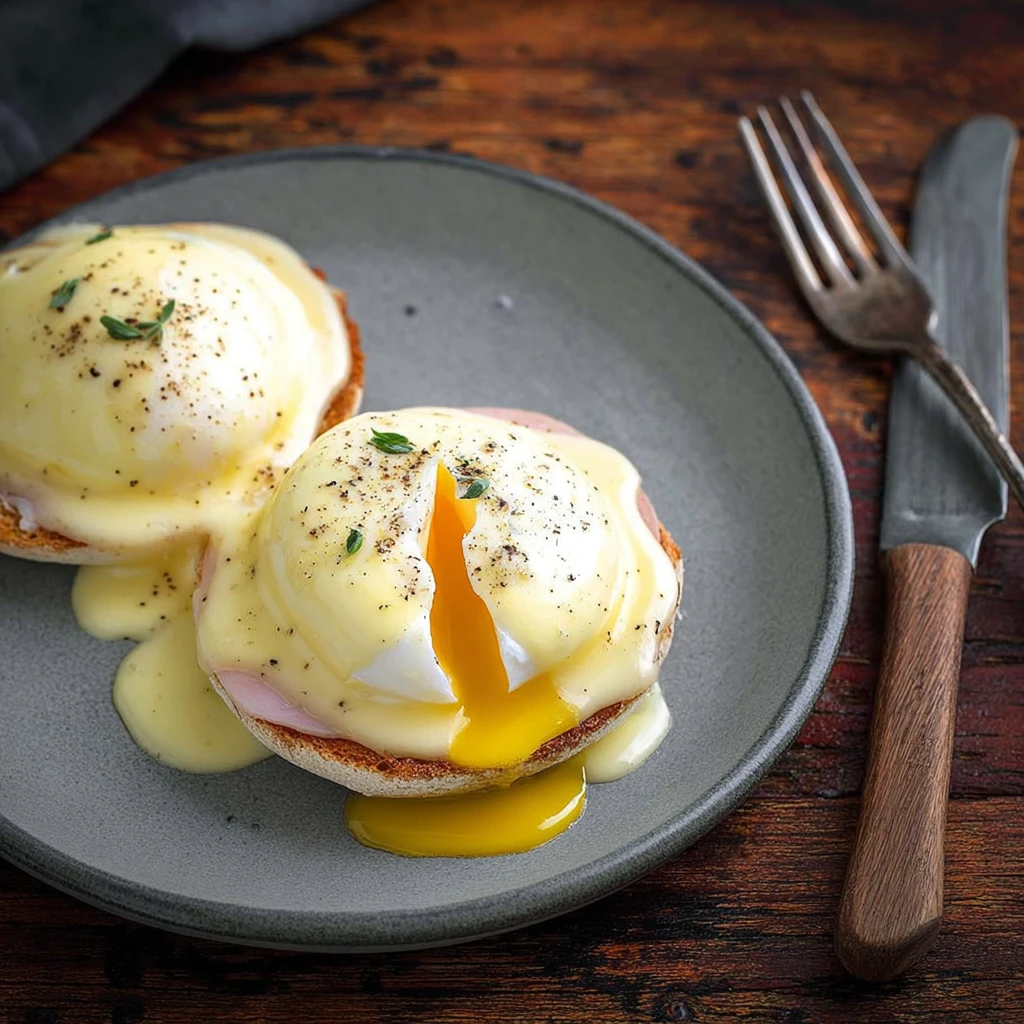
The ingredient list for classic Eggs Benedict is surprisingly short, especially once you see how often the same few components appear across recipes. The traditional formula is English muffins, Canadian bacon or ham, poached eggs, and hollandaise made with egg yolks, lemon juice, and butter.
Eggs Benedict
| Ingredient | Approximate quantity | Note |
|---|---|---|
| English muffins | 2 to 4, split | The classic toasted base of the dish. |
| Canadian bacon or ham | 4 to 8 slices | Traditional savory layer; some versions use bacon or smoked salmon. |
| Fresh eggs | 4 to 8 | Used for poaching; freshness helps them hold together better. |
| White vinegar | 1 to 2 tablespoons | Often added to poaching water to help the egg whites set. |
| Butter for toasting, optional | As needed | Some recipes lightly butter the muffins before serving. |
Hollandaise sauce
| Ingredient | Approximate quantity | Note |
|---|---|---|
| Egg yolks | 2 to 3 | The base of the sauce. |
| Butter, melted | 10 tablespoons to 1 cup | Provides the rich body of classic hollandaise. |
| Lemon juice | 1 to 2 tablespoons | Adds brightness and cuts through the richness. |
| Salt | To taste | Essential for balance. |
| Cayenne or black pepper, optional | Pinch | Often added for subtle warmth. |
| Warm water or cream, optional | 1 to 2 tablespoons | Some recipes use it to thin the sauce to a pourable consistency. |
The two ingredients that most define this recipe are the poached eggs and the hollandaise. Several sources specifically note that the sauce should be smooth, thick, and warm, but still pourable.
Step-by-Step Instructions
1. Make the hollandaise sauce
Start by melting the butter until hot but not browned. Then blend or whisk the egg yolks with lemon juice and seasonings, slowly incorporating the hot butter to create a thick, creamy sauce. Both traditional and blender methods appear across the recipe sources, but the common principle is the same: add the butter gradually so the yolks emulsify instead of scrambling.
If the sauce seems too thick, whisk in a teaspoon or two of warm water. One source specifically recommends warm water to thin the sauce to a pourable consistency.
2. Poach the eggs
Bring a pot of water to a gentle simmer and add a little vinegar. Crack each egg into a small cup or ramekin first, then gently slide it into the water. Several classic recipes recommend this method because it gives you more control and helps the eggs hold their shape.
Poach for about 3 to 4 minutes, until the whites are set but the yolks are still runny. One detailed recipe specifically advises avoiding stirring while the eggs cook so they do not break apart.
3. Toast the muffins and warm the meat
While the eggs cook, toast the English muffins until golden and warm the Canadian bacon or ham in a skillet. The traditional recipes consistently build the dish on toasted English muffins topped with warmed slices of Canadian bacon or ham.
A helpful tip here is to toast the muffins enough that they hold up under the egg and hollandaise without going soggy too fast.
4. Assemble the Eggs Benedict
Place the toasted muffin halves on plates, top each with a slice of Canadian bacon or ham, then add a poached egg. This assembly order appears across the classic Eggs Benedict recipes.
Spoon the warm hollandaise generously over the top. Finish with a pinch of cayenne, paprika, black pepper, or chopped chives if you like. Several recipes suggest these exact finishing touches.
5. Serve immediately
Eggs Benedict is best served right away while the muffins are crisp, the eggs are warm, and the hollandaise is silky. Multiple sources emphasize serving as soon as assembled for the best texture and presentation.
That first cut into the poached egg, when the yolk runs into the sauce and over the muffin, is exactly what makes this breakfast feel so special.
This classic plated style is exactly what most people picture when they think of Eggs Benedict: toasted muffin, ham, poached egg, and warm hollandaise layered into one elegant brunch dish.
Tips for Success
These small details help Eggs Benedict come out polished and restaurant-worthy.
- Use very fresh eggs for poaching. One recipe specifically calls for fresh eggs because they hold together better in water.
- Crack eggs into ramekins before poaching so you can slide them in gently and more accurately.
- Keep the poaching water at a gentle simmer, not a rolling boil, so the eggs stay intact.
- Add the melted butter slowly to the hollandaise. Multiple recipes emphasize gradual addition to prevent curdling.
- Keep the hollandaise warm, not hot, so it stays smooth and does not split.
- Toast the muffins well enough to support the toppings. This keeps the base from becoming too soft too quickly.
- Assemble just before serving, since Eggs Benedict is one of those recipes that really shines fresh.
Variations & Substitutions
This classic recipe is easy to adapt while keeping its elegant brunch feel.
Smoked salmon Benedict
Swap the ham for smoked salmon. One recipe source specifically lists smoked salmon as a variation for the base.
Bacon Benedict
Use crispy bacon instead of Canadian bacon for a saltier, crispier version. One source specifically uses crispy bacon in its classic-style recipe.
Easy blender hollandaise
If traditional hollandaise feels intimidating, use a blender method. Several current recipes specifically promote blender hollandaise as quick and foolproof.
Vegetarian Benedict
Skip the meat and use sautéed spinach, tomatoes, or avocado instead. While the cited traditional recipes focus on ham and salmon, the core Benedict structure makes these swaps very natural.
What to Serve With It
Eggs Benedict is rich, so it pairs best with sides that add freshness or crisp texture.
- Breakfast potatoes or hash browns make it feel like a full brunch plate.
- Fresh fruit helps balance the richness of the hollandaise and eggs.
- A simple green salad works beautifully for a lighter brunch spread.
- Coffee, tea, or fresh orange juice pair naturally with the savory, buttery flavor of the dish.
Storage & Reheating
Eggs Benedict is best enjoyed fresh, especially because hollandaise sauce and poached eggs are at their peak right after making. The recipe sources focus on immediate serving, which reflects how quickly the dish can lose its ideal texture once assembled.
If you do need to prep ahead, keep the components separate. Toast the muffins, warm the meat, and poach the eggs just before serving if possible, while the hollandaise should be kept warm briefly or remade fresh for the best result. The sauce is the most delicate element, so it does not hold as well as the other components.
Fully assembled Eggs Benedict is not ideal for long storage because the muffins soften and the sauce can split when reheated.
Nutrition Facts
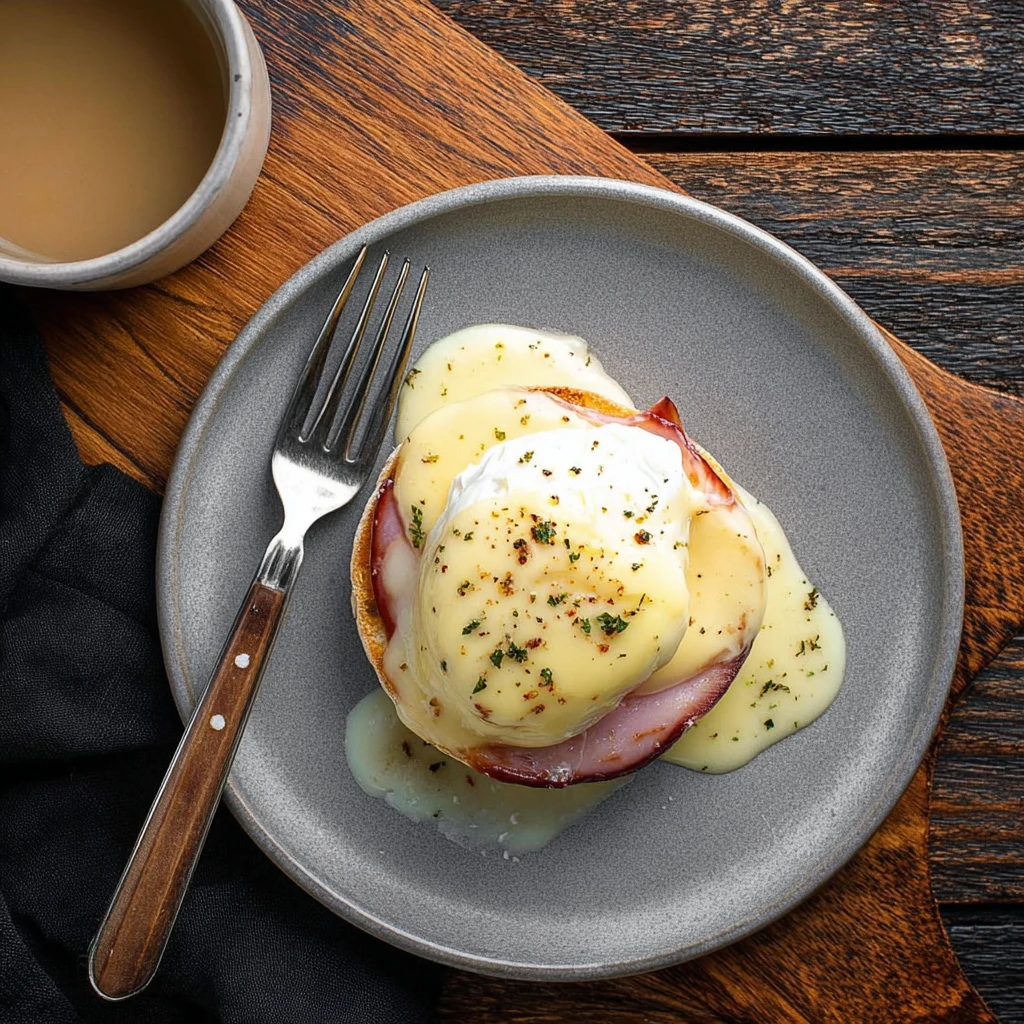
Nutrition varies by portion size and how much hollandaise is used, but the available sources offer a useful range. One Eggs Benedict listing provides 260 calories, 15 grams of fat, 15 grams of carbs, and 13 grams of protein per serving, while another nutrition source describes Eggs Benedict as generally landing around 350 to 400 calories per serving with high protein and fat.
Here is a practical estimated nutrition profile for one serving of classic Eggs Benedict:
| Nutrient | Estimated per serving |
|---|---|
| Calories | 260 to 400 |
| Protein | 13 to 18 g |
| Carbs | 15 to 20 g |
| Fat | 15 to 28 g |
| Fiber | 0 to 2 g |
| Sugar | 2 to 3 g |
| Sodium | 590 to 1600 mg, depending on the ham and sauce |
Eggs Benedict is best described as a rich, protein-forward breakfast or brunch dish rather than a light breakfast. The hollandaise and meat make it especially satisfying, but they also raise the fat and sodium levels compared with simpler egg dishes.
Common Mistakes to Avoid
A few easy mistakes can make this classic feel harder than it really is.
- Pouring the butter too quickly into the hollandaise can cause the sauce to split or curdle. Multiple sources specifically warn to add it slowly.
- Poaching eggs in boiling water instead of a gentle simmer can tear the whites and create ragged eggs.
- Using older eggs can make poaching harder because the whites spread more in the water.
- Letting the hollandaise get too hot can break the sauce and ruin the smooth texture.
- Assembling too early can leave the muffins soggy and the dish less appealing by the time it reaches the table.
FAQ
What is the traditional base for Eggs Benedict?
Classic Eggs Benedict is usually built on toasted English muffins with Canadian bacon or ham, poached eggs, and hollandaise sauce. That structure appears consistently across the recipe sources.
Is hollandaise sauce hard to make?
It can be tricky if you rush it, but several modern recipes use blender hollandaise or simplified methods to make it much easier.
How long should I poach eggs for Eggs Benedict?
Most detailed recipes recommend about 3 to 4 minutes so the whites are set but the yolks stay runny.
Can I make Eggs Benedict ahead of time?
It is best fresh, but you can prep some elements ahead and assemble just before serving. The hollandaise and poached eggs are the most delicate parts.
Can I use bacon instead of Canadian bacon?
Yes. One classic-style source specifically uses crispy bacon, and other versions use ham or smoked salmon.
Why did my hollandaise split?
The most common reason is adding the butter too quickly or overheating the yolks. Multiple recipes warn against both.
Is Eggs Benedict high in protein?
Yes, it is moderately to highly protein-forward for a breakfast dish because of the eggs and meat, though it is also rich in fat due to the hollandaise.
Conclusion
Eggs Benedict is a classic breakfast delight because it balances richness, comfort, and elegance in one unforgettable plate. With crisp English muffins, savory ham, poached eggs, and velvety hollandaise, it turns a simple breakfast into something that feels celebratory and indulgent without losing that familiar comfort-food charm. That traditional identity is strongly supported across the classic recipe sources.
If you loved this brunch classic, the next delicious directions to try are smoked salmon Benedict or a version with easy blender hollandaise for a faster weekend breakfast. Both stay true to the same buttery, poached-egg magic that makes Eggs Benedict so special.
Eggs Benedict
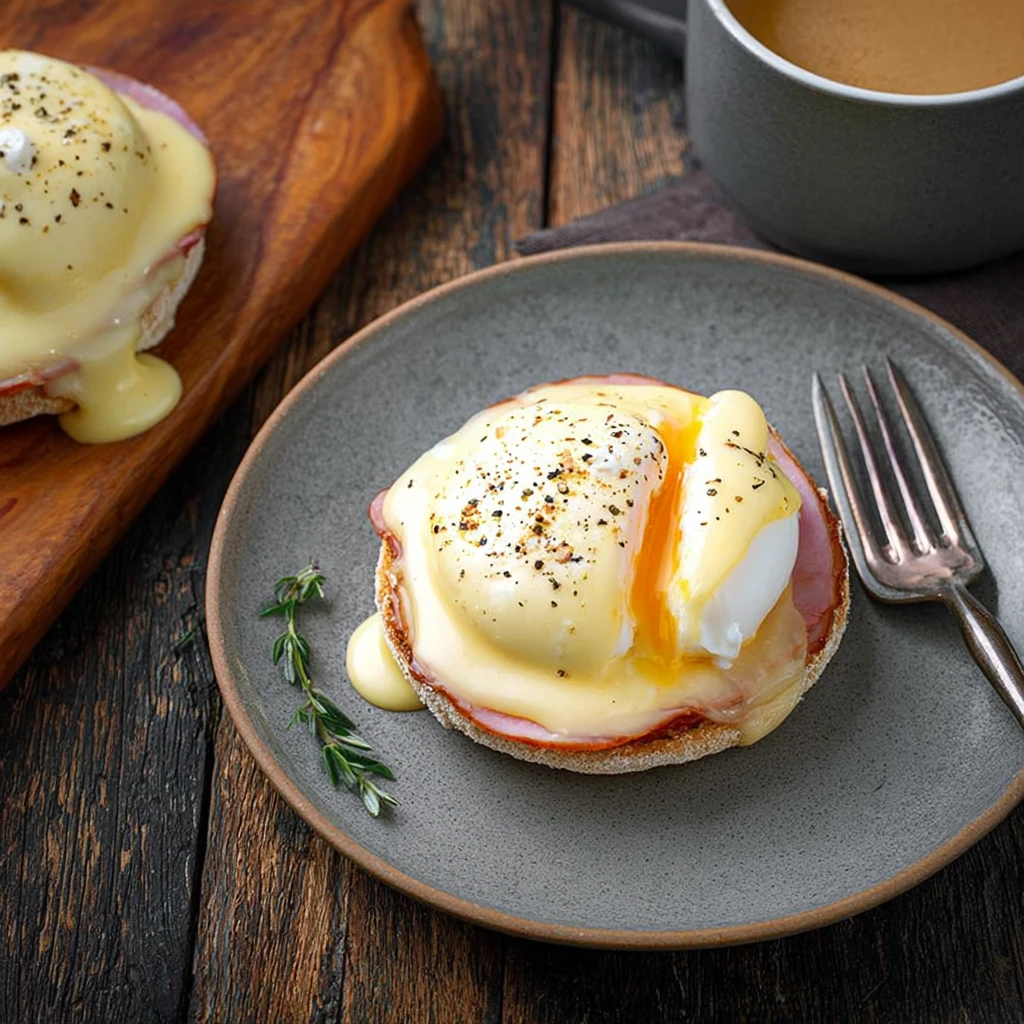
A classic breakfast dish featuring toasted English muffins, crispy Canadian bacon, perfectly poached eggs, and velvety hollandaise sauce.
Ingredients
- 2 English Muffins
- 4 Poached Eggs
- 4 slices Canadian Bacon
- Hollandaise Sauce
- Chives (for garnish)
Directions
-
Toast the English muffins until golden brown.
-
Cook the Canadian bacon until crispy.
-
Poach the eggs until the whites are set but the yolks are still runny.
-
Assemble the Eggs Benedict by placing the Canadian bacon on the toasted muffins, followed by the poached eggs.
-
Drizzle hollandaise sauce generously over the eggs.
-
Garnish with chopped chives for a pop of freshness.