
Table of Contents
German Pancakes: A Comforting Breakfast Delight
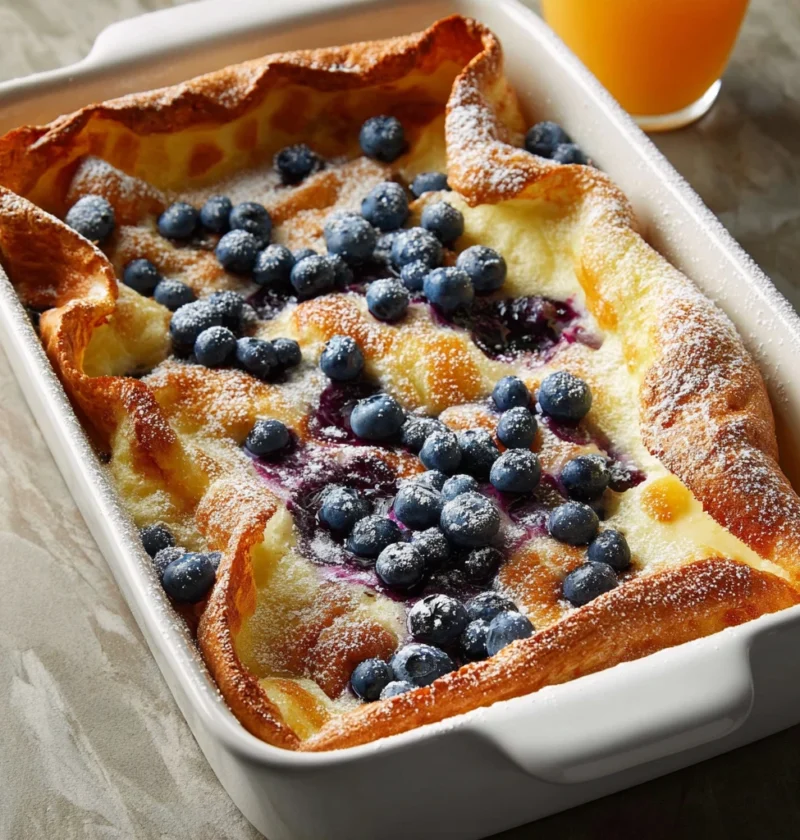
There is something almost magical about German Pancakes as they rise in the oven, puffing into golden, dramatic edges with a soft, custardy center that feels somewhere between a pancake, a crepe, and a popover. Modern recipe sources consistently describe German pancakes, often called Dutch babies in the United States, as an oven-baked breakfast made from eggs, milk, flour, butter, and a little vanilla, baked in a hot pan until billowy and golden.
What makes them such a comforting breakfast delight is how simple they are. You blend or whisk together a thin batter, pour it into a hot buttered pan, and let the oven do the rest while the pancake climbs up the sides and turns beautifully crisp at the edges. Multiple recipes note that they require only a handful of ingredients and about 5 minutes of prep, which is a big part of their lasting appeal.
The texture is what really wins people over. The edges bake up airy, browned, and lightly crisp, while the middle stays tender, eggy, and almost custard-like, making them perfect for a dusting of powdered sugar, a squeeze of lemon, or a pile of berries. Several recipe sources describe that exact contrast and recommend serving the pancake immediately for the best puff and texture.
For this version, I’m treating German Pancakes as a comforting American breakfast favorite inspired by the Dutch baby style, baked in the oven with butter, eggs, milk, flour, and vanilla. It is cozy, dramatic, family-friendly, and exactly the kind of easy breakfast recipe that feels special without asking much from the cook. Let’s get started.
Why You’ll Love This Recipe
This is the kind of breakfast that feels impressive but is secretly very easy.
- It uses just a few basic ingredients, most often eggs, milk, flour, butter, salt, and vanilla.
- It takes only a few minutes to prepare because many versions use a blender for the batter.
- If you love fluffy pancakes, crepes, or baked breakfast casseroles, this recipe gives you a little of all three with one simple method. Recipe descriptions repeatedly call the center custardy and the edges crisp or billowy.
- It feels dramatic and special when it puffs in the oven, even though the process is incredibly straightforward.
- It works for breakfast, brunch, or even breakfast-for-dinner. One source specifically frames it that way.
- It is endlessly customizable with berries, powdered sugar, syrup, lemon, whipped cream, or even savory toppings.
Ingredients
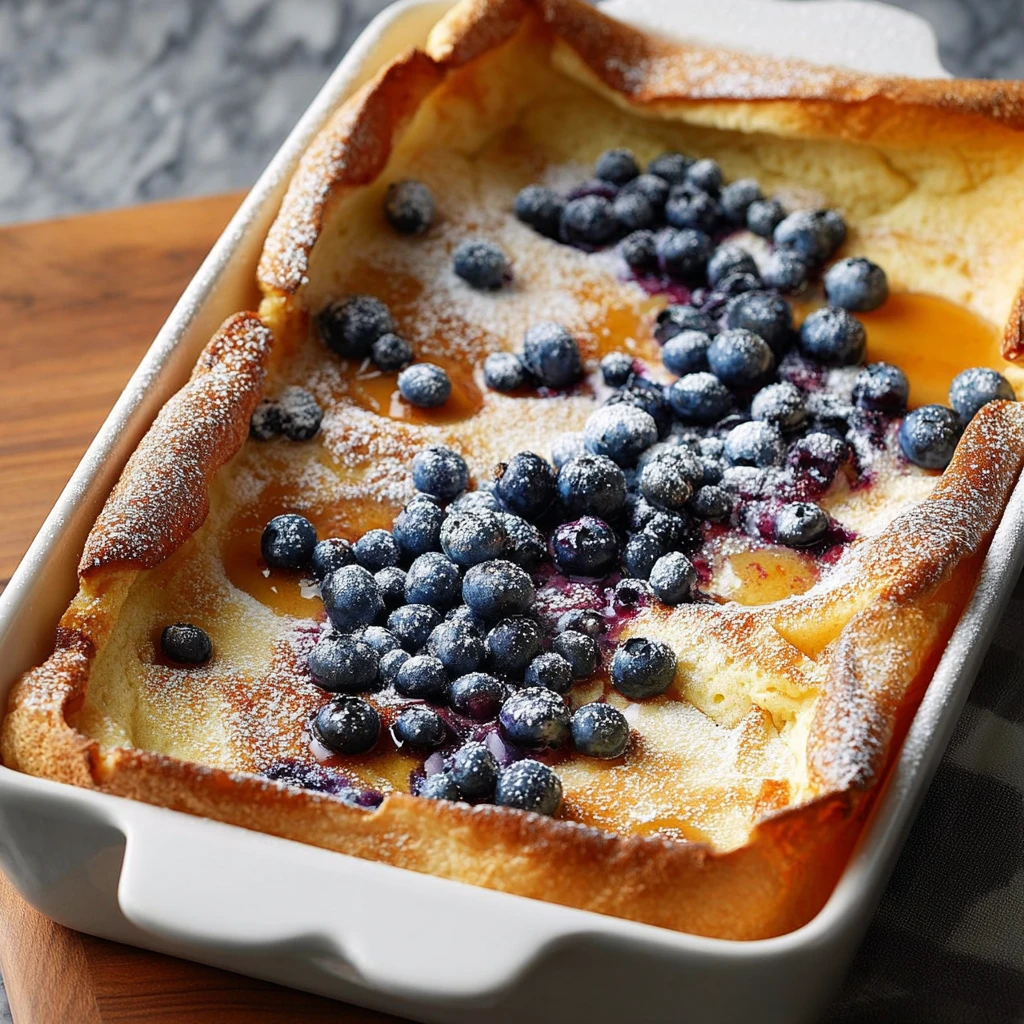
German pancake recipes are very consistent, which makes the formula wonderfully reliable. The most common versions use eggs, milk, flour, butter, salt, and vanilla, with some adding a little sugar or optional nutmeg depending on whether the final flavor leans more sweet.
| Ingredient | Approximate quantity | Note |
|---|---|---|
| Large eggs | 6 for a 9×13 pan, or 3 for a skillet version | Eggs are the key to the puffed structure and custardy center. |
| Whole milk | 1 cup for a 9×13 version, or 1/2 to 3/4 cup for a smaller pan | Adds richness and helps create the tender texture. |
| All-purpose flour | 1 cup for a 9×13 version, or 1/2 to 3/4 cup for a smaller pan | Gives the pancake just enough structure to rise and hold shape. |
| Butter | 3 to 6 tablespoons | Melted in the hot pan for flavor and to help the pancake puff. |
| Salt | Pinch to 1 teaspoon | Balances the batter. |
| Vanilla extract | 1 teaspoon | Common in sweet breakfast versions. |
| Sugar, optional | 1 tablespoon to 3 tablespoons | Some recipes include a little sugar for sweetness. |
| Nutmeg or cinnamon, optional | Pinch | A few recipes add warm spice for extra depth. |
| Powdered sugar, berries, lemon, or syrup | For serving | These are among the most common toppings. |
Using room-temperature ingredients can help the batter blend more smoothly. One recipe specifically suggests warming the eggs and milk slightly before mixing, which supports a better rise.
Step-by-Step Instructions
1. Preheat the oven and heat the pan
Preheat your oven to 400°F to 425°F, depending on your pan and preferred recipe style, and place the butter in a 9×13-inch baking dish or skillet so it melts as the oven heats. Published German pancake recipes commonly use a preheated pan with melted butter, and many fall in the 400°F to 425°F range.
A useful tip here is to let the pan get properly hot. The combination of a hot pan and melted butter helps trigger that signature puff when the batter goes in.
2. Make the batter
Add the eggs, milk, flour, salt, vanilla, and optional sugar to a blender, then blend until smooth. This blender method appears in many of the most common recipes because it is fast and creates a very smooth batter with minimal effort.
If you do not have a blender, whisking works too, but make sure no flour pockets remain. A smooth batter helps the pancake rise more evenly and keeps the center tender.
3. Pour into the hot buttered pan
Once the butter is melted and the pan is hot, carefully remove it from the oven and pour in the batter. Several recipes instruct pouring the batter directly over the melted butter in the hot baking dish.
Work quickly here so the pan stays hot. That temperature contrast is part of what gives the pancake those dramatic, puffed edges.
4. Bake until puffed and golden
Bake for about 18 to 25 minutes, or until the German pancake is puffed, golden at the edges, and no longer glossy in the center. The timing varies slightly by pan size, but the recipe sources consistently use this general range.
Do not open the oven early if you can help it. Keeping the heat steady gives the pancake the best chance to puff beautifully before it begins to settle.
5. Top and serve immediately
Remove the pancake from the oven and top it with powdered sugar, berries, lemon juice, syrup, or whipped cream. Multiple sources recommend these same toppings and also stress serving it right away while it is still puffed and warm.
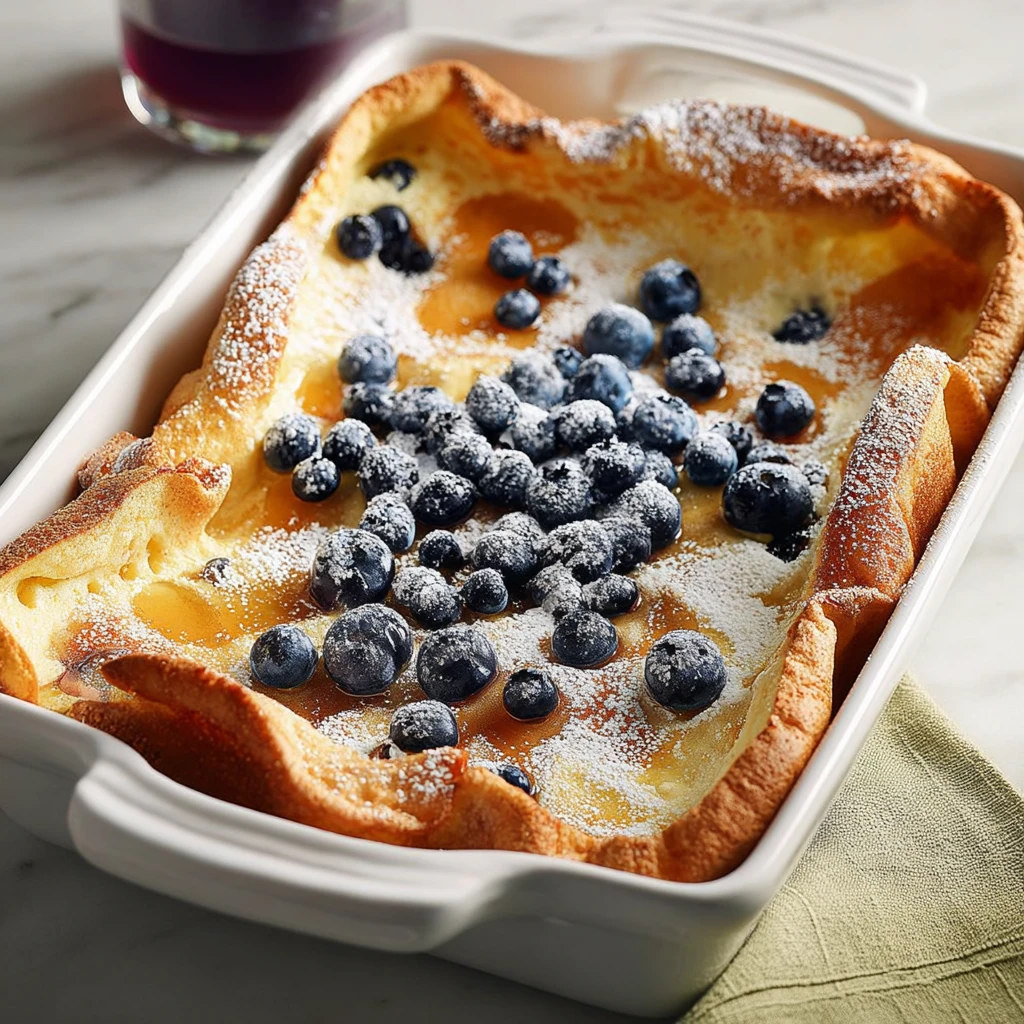
German pancakes naturally deflate after coming out of the oven, and that is completely normal. The magic is in serving them while the edges are still airy and crisp and the center is soft and warm.
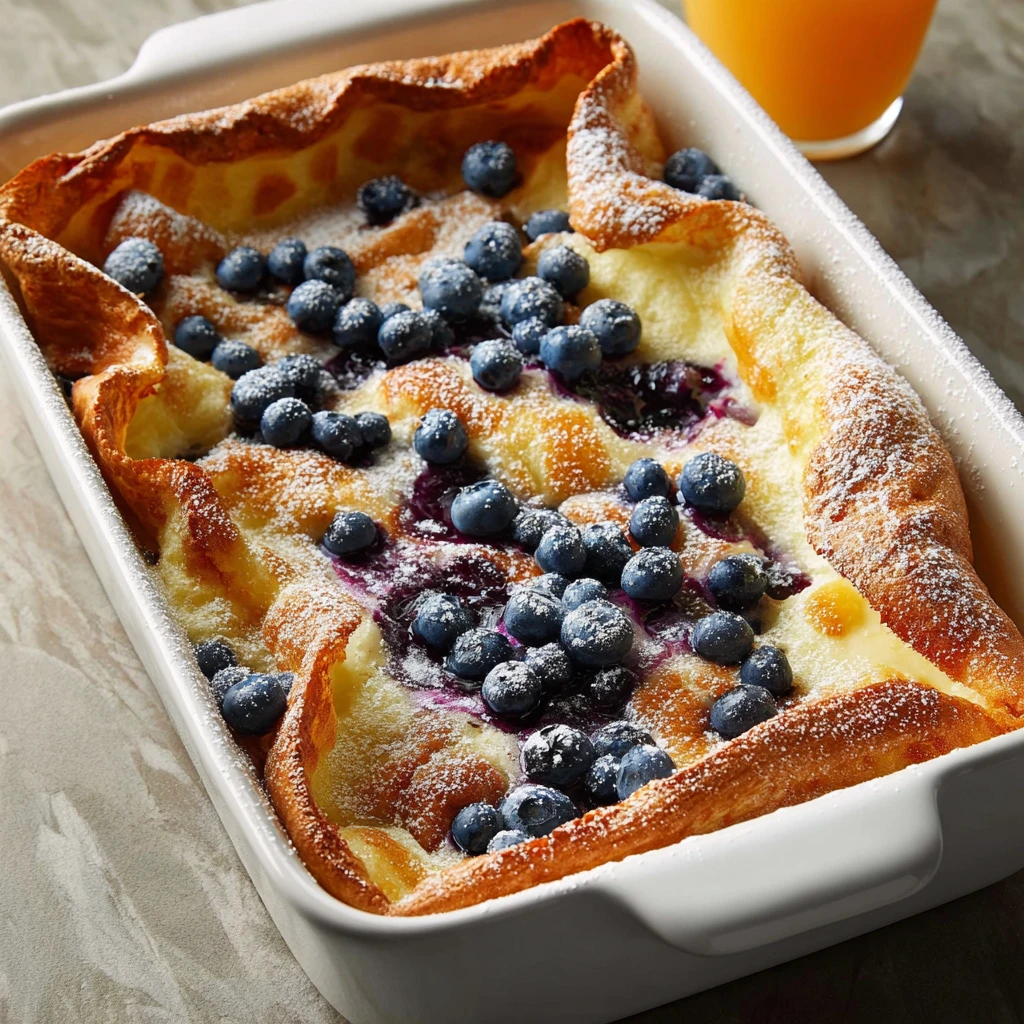
That dramatic puffed shape and golden edge are exactly what people love about German pancakes, and the visual style shown in popular Dutch baby recipes matches that effect closely.
Tips for Success
These simple details can make the difference between a good German pancake and a truly gorgeous one.
- Use a hot pan with melted butter before adding the batter. This is one of the most consistent instructions across recipes.
- Blend the batter until completely smooth. Many recipes rely on a blender specifically for this reason.
- Bring eggs and milk closer to room temperature if possible. One source specifically recommends this for better rise.
- Bake without opening the oven too early so the pancake can puff properly.
- Serve immediately. Multiple sources note that Dutch babies are best eaten fresh from the oven.
- Use a metal baking dish or cast iron skillet for strong heat retention and better browning. Published recipes often use a metal 9×13 pan or cast iron skillet.
- Do not worry when it deflates a bit after baking. That is normal for this style of pancake.
Variations & Substitutions
This recipe is easy to customize depending on how sweet, light, or seasonal you want it.
Berry German pancakes
Top the pancake with raspberries, blueberries, or blackberries. Multiple recipe sources specifically highlight berry versions.
Lemon powdered sugar version
Keep it simple with powdered sugar and a squeeze of fresh lemon juice, which is one of the most classic serving styles for Dutch babies.
Gluten-free version
Use a gluten-free flour blend. One published recipe specifically provides a gluten-free German pancake variation and notes it stays fluffy with crisp edges.
Smaller skillet Dutch baby
Make a smaller version in a cast iron skillet using a scaled-down batter. Several sources provide skillet-format Dutch baby recipes.
What to Serve With It
German pancakes are lovely on their own, but a few sides can turn them into a full brunch spread.
- Fresh berries and whipped cream are among the most common pairings in published recipes.
- Bacon or breakfast sausage adds a savory contrast to the soft, lightly sweet pancake.
- Yogurt and fruit make the plate feel brighter and more balanced.
- Coffee, tea, or fresh orange juice fit perfectly with the cozy brunch personality of this dish.
Storage & Reheating
German pancakes are best eaten fresh, but leftovers can still be enjoyed. One source specifically notes that a gluten-free Dutch baby can be stored in an airtight container in the refrigerator for 4 to 5 days and gently reheated in the microwave.
Store leftovers in an airtight container in the refrigerator for up to 4 days. Reheat gently in the microwave, oven, or toaster oven, though the texture will be softer and less dramatic than when first baked. Since these pancakes are known for their puff and crisp edges, they are strongest fresh from the oven.
If you are making breakfast for a crowd, it is better to bake and serve right away rather than trying to hold them for long.
Nutrition Facts
Nutrition varies depending on pan size, amount of butter, and toppings, but published recipes provide a useful range. One German pancake recipe lists 337 calories, 27 grams of carbohydrates, 13 grams of protein, and 18 grams of fat per square, while a gluten-free Dutch baby lists 171 calories, 15 grams of carbohydrates, 6 grams of protein, and 10 grams of fat per serving. Another nutrition-style listing gives 280 calories, 25 grams of carbs, 10 grams of protein, and 15 grams of fat per serving.
Here is a practical estimated nutrition profile for one serving of German Pancakes before toppings:
| Nutrient | Estimated per serving |
|---|---|
| Calories | 170 to 337 |
| Protein | 6 to 13 g |
| Carbs | 15 to 27 g |
| Fat | 10 to 18 g |
| Fiber | 0 to 2 g |
| Sugar | 1 to 3 g before sweet toppings |
| Sodium | 200 to 225 mg |
This breakfast is best described as comforting and moderate in protein, with the final nutrition shifting more depending on toppings than the base itself. Berries keep it lighter, while syrup and whipped cream make it feel more dessert-like.
Common Mistakes to Avoid
A few easy mistakes can keep German pancakes from reaching their full puffed potential.
- Pouring the batter into a pan that is not hot enough can reduce the dramatic rise. Recipes consistently preheat the pan with butter first.
- Lumpy batter can lead to uneven texture, which is why many sources prefer blending.
- Opening the oven too early can interfere with puffing.
- Underbaking can leave the center too wet or glossy. Most recipes bake until the edges are golden and the center is set.
- Waiting too long to serve means losing some of the best texture. Multiple sources say Dutch babies are best eaten fresh.
FAQ
Are German pancakes the same as Dutch babies?
In many American recipe sources, yes. Several recipes use the terms interchangeably or call German pancakes “aka Dutch Baby.”
Why do German pancakes puff up in the oven?
The high egg content, smooth batter, and hot buttered pan all help create steam and lift during baking, which is why recipes consistently use those exact elements.
Why did my German pancake deflate?
That is normal. Dutch baby and German pancake recipes puff dramatically in the oven, then settle after being removed.
Can I make German pancakes without a blender?
Yes. A blender is common because it makes the batter smooth quickly, but whisking works if you mix thoroughly.
What toppings go best on German pancakes?
Powdered sugar, fresh berries, syrup, lemon juice, and whipped cream are among the most common topping suggestions in the sources.
Can I make German pancakes gluten-free?
Yes. One published recipe specifically provides a gluten-free Dutch baby option and notes that it still turns out fluffy and crisp-edged.
Can I reheat leftovers?
Yes, though the pancake is best fresh. Leftovers can be refrigerated and reheated gently, but they will be softer than when first baked.
Conclusion
German Pancakes are one of those comforting breakfast recipes that feel a little bit magical every single time. With their puffed golden edges, soft custardy center, and simple ingredient list, they turn everyday staples into a breakfast that feels warm, nostalgic, and just special enough for weekends or brunch. That easy, oven-baked, family-favorite identity is strongly reflected across the German pancake and Dutch baby recipe sources.
If you loved this comforting breakfast delight, the next delicious directions to try are a berry Dutch baby or a lemon-and-powdered-sugar German pancake baked in a skillet. Both keep the same airy, buttery character while adding a little extra personality.
German Pancakes
German Pancakes, also known as Dutch Baby Pancakes, are fluffy, oven-baked pancakes with a crispy edge and a soft, custard-like center. Served with a touch of sweetness and a hint of citrus, these pancakes are a comforting breakfast delight that evokes childhood memories and cozy weekend mornings.
Ingredients
- 4 eggs
- 1 cup milk
- 1 cup all-purpose flour
- 2 tablespoons sugar
- 1 teaspoon vanilla extract
- 1/4 teaspoon salt
- 2 tablespoons butter
- Lemon wedges (for serving)
Directions
-
Preheat the oven to 425°F (220°C) and place a cast-iron skillet inside to heat up.
-
In a mixing bowl, whisk together eggs, milk, flour, sugar, vanilla extract, and salt until smooth.
-
Carefully remove the hot skillet from the oven, add butter, and swirl to coat the bottom evenly.
-
Pour the batter into the skillet and return it to the oven. Bake for 20-25 minutes until the pancake is puffed and golden.
-
Serve the German Pancake immediately, accompanied by lemon wedges for a tangy contrast.